Chimney, Flashing and Ridge: The Bits People Forget
When you think about your roof, you probably picture the big sweep of tiles. But the parts that actually let water in are the small joints and edges you never really look at, and they cause far more grief than the open tiles ever do.
Your chimney, your flashing and your ridge take a beating in a place like Hereford. Wet weather rolls up the Wye valley for much of the year, and those joints are where the water tries hardest to find a way through. Get them wrong and you'll have a damp problem long before the tiles themselves give up.
The quick answer: Chimneys, flashing and ridge tiles are the weak points of any roof because they rely on mortar and lead joints, and once those fail, water gets in fast, so they need checking and cleaning just as much as the main slopes.
1. Why the chimney is the first thing to fail
A chimney breaks up the smooth run of a roof, and every place it meets the tiles is a joint that can leak. The mortar around the pot, the flaunching on top and the flashing at the base all sit exposed to the weather, and none of them last forever. On the Victorian terraces around Whitecross, plenty of chimneys still stand even where the fireplace hasn't been used in years.
Damp air and frost are hard on old mortar. Water soaks into a hairline crack, freezes overnight, and slowly prises the joint apart. Once moss and grime build up around the base too, water sits where it shouldn't, and that's when you start seeing stains on the bedroom ceiling below.
2. Flashing: the lead that does the quiet work
Flashing is the lead sheeting that seals the join between the roof and anything sticking up through it, like a chimney or a wall. When it's fitted well and kept clear, you never think about it. When it lifts, splits or gets clogged with debris, it turns into the main way water enters the roof.
On older Hereford homes the lead can be decades old, and it moves slightly with every hot and cold spell. Over time that movement opens gaps, especially where a two-storey home meets a lower extension. Keeping the flashing clear of moss and checking the pointing above it stops small gaps becoming real leaks.
3. Ridge tiles and the mortar that holds them
The ridge runs along the very top of the roof, capping the point where the two slopes meet. Traditionally the ridge tiles are bedded on mortar, and that mortar is right in the firing line for wind and rain. It's often the first thing to crack and crumble on an older roof.
When a ridge tile works loose, it doesn't just risk a leak, it can slide off completely in a gale. Given how exposed some homes are up on the higher ground around Tupsley, a loose ridge tile is worth sorting quickly. A clean and a check along the ridge often catches these before winter does.
4. How moss makes all three worse
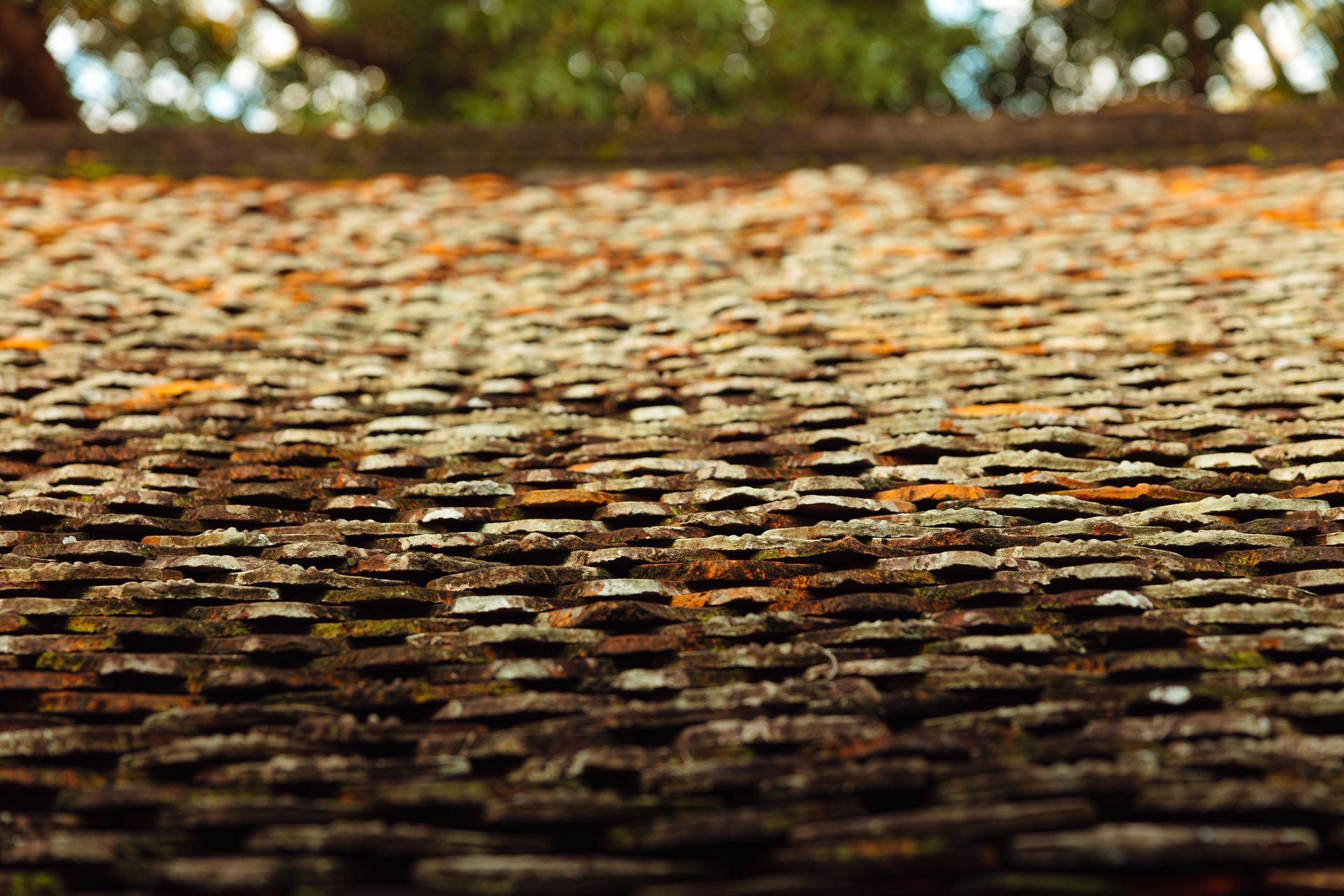
Moss loves a joint. It takes hold in the rough mortar around chimneys and ridges far more easily than on a smooth tile, and once it's there it holds water against the very spots you want to keep dry. That's a fast track to frost damage and softening mortar.
This is why a proper roof clean doesn't stop at the open tiles. Clearing moss off the ridge and around the chimney base, then treating those areas, protects the joints that matter most. In our damp county, ignoring them just lets the growth quietly do its damage.
5. What a good inspection actually looks at
A worthwhile roof visit spends time on these details rather than just the flat runs of tile. It means looking at the state of the flaunching on the chimney, the condition of the lead flashing, and whether the ridge mortar is sound or flaking away. These are the things that predict a leak.
You can spot some of it from the ground with a decent pair of eyes, but a lot hides from view. A cleaner already up at the ridge to clear moss is in the best position to flag a cracked flaunching or a slipped tile before it turns into an inside job.
6. Timing it for the Hereford weather
The worst time to discover a failing joint is mid-winter, when the roof is wet and freezing and nobody wants to be up there. The sensible move is to sort the chimney, flashing and ridge in the drier spells of late summer and early autumn, before the weather closes in.
Herefordshire doesn't get the harshest winters in the country, but it gets plenty of wet, and it's the repeated soaking and the odd hard frost that do the damage. Clearing and checking these areas before then gives your roof the best chance of coming through the cold months without a leak.
- Chimney mortar: flaunching and pointing crack with frost and let water track down inside.
- Lead flashing: lifts and splits with age, becoming the main entry point for rain.
- Ridge tiles: bedded on mortar that crumbles and can send a tile sliding in a gale.
- Moss in joints: holds damp against mortar and speeds up frost damage.
- Best timing: late summer and autumn, before Hereford's wet winter sets in.
Frequently Asked Questions
How do I know if my flashing has failed?
Damp patches on an upstairs ceiling near a chimney breast or an internal wall are the classic sign. Often the lead looks fine from the ground, so a closer look from the roof is the only way to be sure.
Can you clean around a chimney without damaging it?
Yes, a soft wash uses low pressure that clears moss and grime without blasting away weak mortar. That gentle approach suits the older chimneys found on so many Hereford homes.
Why does my ridge keep growing moss?
The mortar between ridge tiles is rough and porous, so it holds moisture and spores far better than a smooth tile. In our damp climate that makes the ridge one of the first places moss returns.
Is a loose ridge tile really urgent?
It's worth acting on quickly. A tile that has worked loose can let water in and, in a strong wind, can slide off entirely, which is a danger to anyone below.
Do these areas need doing every time the roof is cleaned?
They should always be checked as part of the job. Cleaning the joints and flagging any failing mortar is part of looking after the whole roof, not just the tiles that show.
Worried about the joints on your roof?
Ben's Roof Cleaning carries out roof cleaning, moss removal and gutter cleaning across Hereford and Herefordshire, with over 15 years of experience. Get in touch or call 01432 687073
for a free, no-obligation quote.
The small joints are worth more attention than the big tiles
It's easy to judge a roof by the tiles you can see, but the chimney, flashing and ridge are where the real trouble tends to start. Keeping them clean, clear of moss and sound is one of the simplest ways to stop a small fault turning into an expensive leak, and it matters all the more under Herefordshire's wet skies.